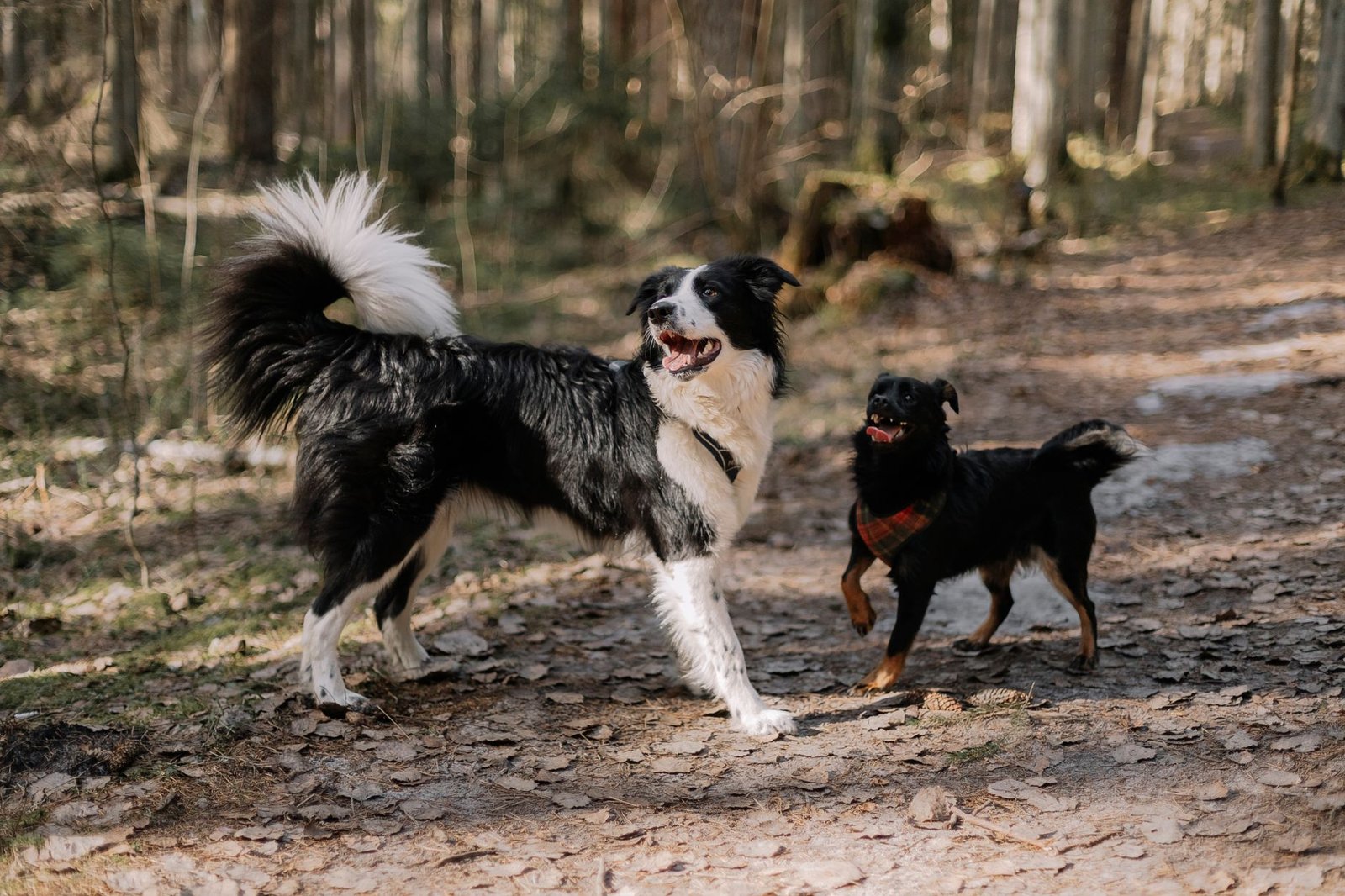
You see the other dog first. Your dog spots them a second later and the whole walk changes: barking, lunging, pulling, no interest in anything you say. Owners read this as aggression or rudeness. In the large majority of cases it is neither. It is a dog asking for distance in the only way left to them.
Why the leash changes everything
Two loose dogs meeting have options. They can curve around each other, sniff and move on, or simply leave. That arc is how dogs politely handle meeting, and it needs space.
On leash, all of that is gone. They are pulled into a straight line heading directly at the other dog, which between dogs reads as confrontational, and they cannot increase the distance no matter what they feel. A dog who is worried and cannot move away does the only other thing available: makes a lot of noise and hopes the other dog goes away.
And here is the part that keeps it going. It works. The other dog nearly always does pass by, which from your dog’s point of view means the barking succeeded. Every walk rehearses it.
What is usually underneath
- Worry, which is the commonest driver by a distance. The dog is not confident and wants space.
- Frustration, in friendly dogs who desperately want to greet and cannot. This looks almost identical from the other end of the leash and needs a different plan.
- A bad experience, often a single one, sometimes while on leash and unable to escape.
- Pain. A dog who hurts has less tolerance for surprises, and reactivity that appears in an adult dog who was previously fine is worth a physical check first.
- Not much early experience of other dogs, so other dogs remain unpredictable.
- Sight or hearing changes, particularly in older dogs, which make approaching dogs appear suddenly rather than gradually.
What makes it worse
The instinctive responses nearly all backfire.
Correcting the noise, whether a jerk on the leash, a raised voice or anything startling, adds something unpleasant that arrives exactly when the other dog does. The dog’s conclusion is that other dogs predict discomfort, which is the opposite of what you want.
Tightening the leash as you spot the other dog telegraphs your tension straight down the line and holds your dog in place. Keep walking and keep the leash loose where you can.
Walking straight at them to prove it is fine removes the distance that your dog is asking for.
Forcing a greeting to settle it rarely ends well, and one bad meeting can set you back months.
What actually helps
- Find the distance where your dog can still think, and work there rather than closer. That distance is the single most important variable, and it is usually further than owners expect.
- Feed the moment they see the other dog, before the reaction starts. Something genuinely good, every time, so the sight of a dog starts predicting something pleasant.
- Turn and go the other way without drama when the distance is too small. Leaving is a legitimate answer, not a failure.
- Use the geography. Cross the road, step behind a parked car, go up a driveway. Breaking the line of sight does more than any technique.
- Walk at quieter times for a few weeks while you build the foundation. Every uncontrolled encounter is a rehearsal of the old pattern.
- Use a well-fitted harness, which gives you control without adding discomfort around the neck at the moment of arousal.
Progress is measured in how quickly your dog recovers, not in how close you can get. A dog who used to bark for a minute and now looks at you after five seconds has improved considerably, even if the distance has not changed at all.
Where we come into it
Reactivity that is new in an adult dog, or that has clearly worsened, is worth a physical examination before anything else. Discomfort, failing eyesight and hearing loss all shorten a dog’s fuse, and none of them is obvious on a walk.
Our medical services cover that assessment, a wellness visit is the straightforward place to raise it before it becomes entrenched, and for dogs whose reaction is severe there is more we can offer alongside the training than most owners expect. Where a dog has been hurt in an encounter, our urgent care covers the same-day side. Pet diagnostics is how we check the physical possibilities rather than assume them.
Our hours
We are open Monday to Saturday from 8:00 am to 8:00 pm and Sunday from 9:00 am to 5:00 pm, with the same Sunday hours on statutory holidays.
Reactivity is a booked conversation and a worthwhile one. A dog who has been bitten, or who has injured themselves pulling or thrashing on a leash, should be seen the same day. If that happens when we are closed, go to an open emergency hospital rather than waiting for us to open.
Common questions
Is my dog aggressive?
Almost certainly not in the way you mean. Most leash reactivity is worry or frustration, and the same dog is frequently fine with other dogs off leash.
Will they grow out of it?
Left alone it usually becomes more established rather than less, because every walk rehearses it. It responds well to work, and early is easier than late.
Should I let them meet other dogs to get used to it?
Not on leash, and not while they are reacting. Controlled time near calm dogs at a comfortable distance achieves far more.
My dog is fine at the dog park but terrible on the sidewalk.
That is a very common pattern and it points at the leash rather than the dogs. Off leash they can use distance and body language; on leash they cannot.
What about a head collar or a harness with a front clip?
Fitted and introduced properly, either can help you manage the moment safely. Neither changes what the dog feels, so use them alongside the distance work rather than instead of it.
Speak to the team at Glenn Mountain Animal Hospital
Work out the distance at which your dog can still take food on a walk, and stay there for two weeks. If this has appeared recently in an adult dog, book a visit first.
Published by the team at Glenn Mountain Animal Hospital.
This article is for general educational purposes only and is not a substitute for an in-person veterinary examination or advice about your individual pet. If you have an urgent concern about your pet, contact Glenn Mountain Animal Hospital or your nearest emergency veterinary hospital right away.
Glenn Mountain Animal Hospital
#106-2596 McMillan Road, Abbotsford, BC V3G 1C4
Phone: (604) 852-3030
Hours: Monday to Saturday 8:00 am to 8:00 pm; Sunday 9:00 am to 5:00 pm; statutory holidays 9:00 am to 5:00 pm